The through line
New technology matters when people can use it.
I have spent my career at the point where a new platform meets the people who need to understand it. Sometimes that meant writing code. Often it meant teaching, building a developer community, bringing feedback to product teams, or helping an executive see a change before it became obvious.
This is not a compressed resume or a claim that I did any of this alone. It is a living, source-backed perspective on the teams, communities, products, and platform shifts that shaped my work - plus firsthand context for the parts of that history the public web did not preserve.
1980s-2007
Foundations
Learning to connect technology with people
Early computers, NJIT, consulting, and enterprise systems
My fascination with computing began before it was an obvious career path. I learned on early Commodore machines, then studied Information Systems at New Jersey Institute of Technology, graduating in 1998. That mix of business and technology became the foundation for everything that followed.
I spent years in consulting and enterprise technology, including work as a technology manager at Johnson & Johnson. Those environments taught me that technical correctness is only one part of successful adoption. People also need context, confidence, and a reason to change how they work.
The best technical work becomes useful only when someone can see themselves succeeding with it.
2007-2013
Microsoft
Developer evangelism became my craft
Windows, Windows Phone, Xbox, Azure, web, mobile, and games
I joined Microsoft as a developer evangelist in 2007. Over six years, I worked across Windows, Windows Phone, Xbox, Azure, web development, mobile applications, and games. I taught full-day courses, spoke at conferences and community events, built samples, and learned how to translate a fast-moving product roadmap into something developers could act on.
Conference records from Visual Studio Live preserve part of that work: Windows Phone and XNA game development, Windows 8, and the broader Microsoft developer platform. My Slideshare archive still carries presentations from that era across Windows, Azure, HTML5, JavaScript, mobile services, and app design.
Developer relations is a loop: teach clearly, listen closely, bring the friction back to the product, and return with something better.
2013-2015
Amazon devices
From mobile ecosystems to devices in the home
Amazon Appstore, Kindle Fire, Fire TV, and Fire Phone
I joined Amazon in 2013 to help mobile and game developers reach customers through Amazon Appstore and the growing Fire device family. My work sat around the developer side of Kindle Fire, Fire TV, and Fire Phone: explaining the platform, teaching its APIs, gathering feedback, and helping existing Android developers understand the path into Amazon's ecosystem.
At GDC Europe in 2014, for example, I led sessions on Appstore reach, Fire OS, Fire Phone hardware, Dynamic Perspective, and the practical work of bringing games to new Amazon devices. The technologies changed, but the adoption problem was familiar: reduce uncertainty and make the first successful build feel possible.
A new platform grows faster when developers can carry forward what they already know.
2015-2020
Alexa and Echo
Helping voice become a developer platform
Alexa Skills Kit, smart home, community, and a new interface
Amazon's first Echo began inside the company as Project Doppler. I encountered it from the Amazon Devices side, where the immediate question was not yet how to scale an established platform. It was whether outside developers would see enough possibility in this new device to invent for it at all.
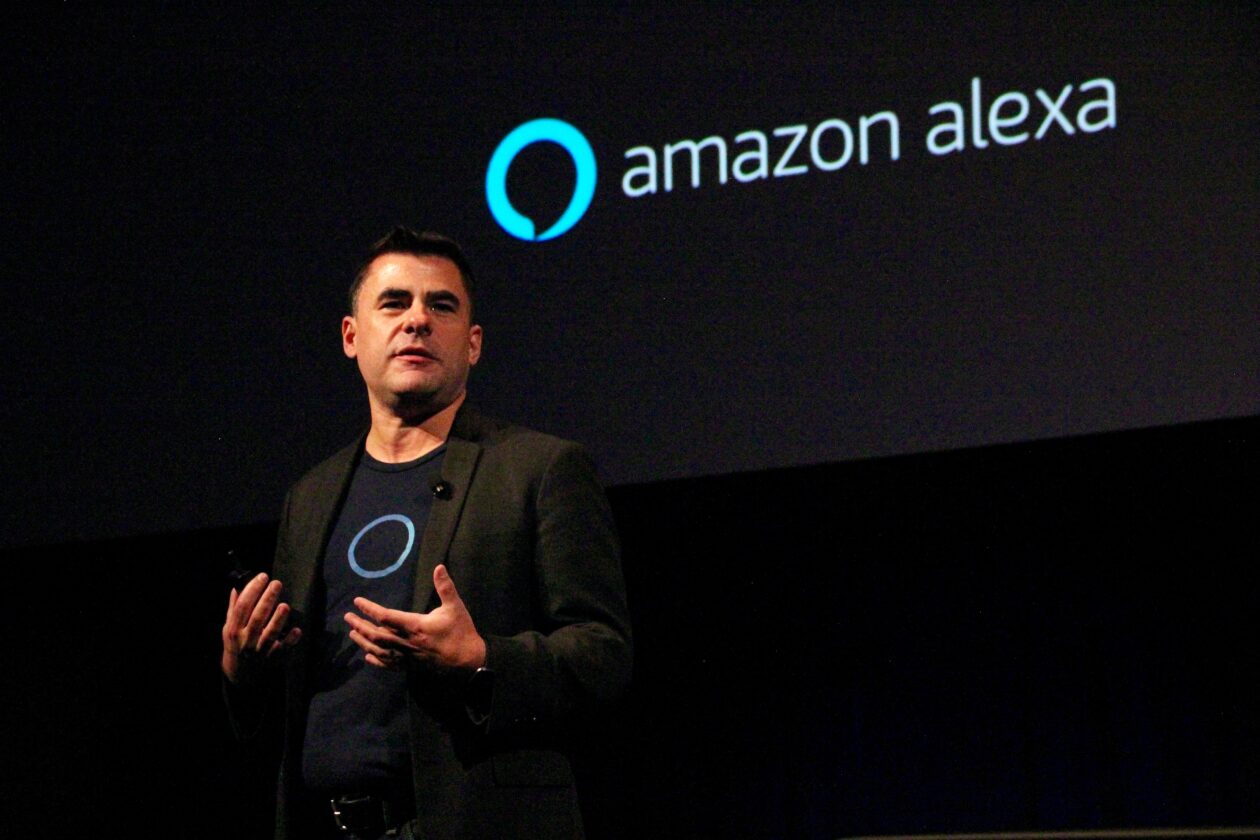
That experiment grew into office hours, Slack groups, meetups, hackathons, and eventually a global developer ecosystem building tens of thousands of voice experiences. Over time, my work expanded into keynotes, executive conversations, and helping organizations understand what a voice-first platform could make possible.
As Chief Evangelist for Alexa and Echo, I became one of the public bridges between Amazon's teams and the people imagining what voice could become. Business Insider documented the calls I received from smart-home manufacturers as Alexa became a unifying interface. Voicebot later described me as one of Alexa's most frequent public faces and ranked me second among its 2019 voice influencers.
I also created and hosted Alexa Dev Chat, wrote extensively for the Alexa developer community, and co-authored a peer-reviewed article about voice technology and patient connection. The work was never only about a speaker. It was about whether computing could become more natural, accessible, and present without demanding another screen.
A new interface has truly arrived when people stop thinking about the interface and simply express what they want.
- Amazon on Project Doppler
- My five-year Alexa retrospective
- Business Insider on Echo and smart home
- Amazon Echo on Wikipedia (tertiary reference)
- Crunchbase career profile (reference)
- Voicebot Top 11
- Retail Week Tech 100
- GeekWire at CES 2017
- Johns Hopkins Leading Change lecture
- Yext ONWARD18 conference announcement
- New Jersey Business Magazine on the voice frontier
- Sound in Marketing: Intro to Amazon Alexa
- BombBomb on Alexa-era technology evangelism
- GeekWire Alexa Accelerator report
- AWS re:Invent: Alexa developer training (2015)
- Street Fight Summit: Amazon's voice-search strategy (2017)
- Modern CTO: Leadership, learning, and Alexa (2018)
- The Voice Den: Premiere featuring Dave (May 2020)
- Alexa Dev Chat
- Harvard Business School
2020-2024
AWS
Cloud scale, developer tools, and durable communities
Developer advocacy, AWS Heroes, Community Builders, and podcasting
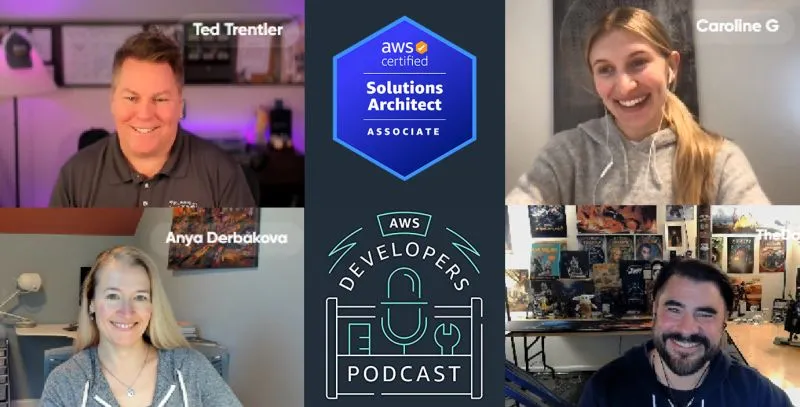
By 2020, my Amazon chapter had moved into AWS, where I served as a Principal Developer Advocate. I focused on developer tools and on the people who make cloud technology useful in practice, including AWS Heroes, Community Builders, and builders working across the AWS ecosystem.
I also created, produced, and hosted the AWS Developers Podcast through its first 115 episodes. The show let me keep doing what had worked throughout my career: bring engineers, advocates, customers, and community leaders into a conversation where complicated systems became understandable through real experience.
At cloud scale, community is not an accessory to the platform. It is how knowledge, trust, and working patterns travel.
2024-present
Chainlink Labs
Connecting software to the future of finance
Blockchain infrastructure, tokenization, and onchain finance
After more than a decade at Amazon, I joined Chainlink Labs in June 2024 as Chief Developer Relations Engineer. It opened another platform shift: helping developers and organizations understand decentralized infrastructure, smart contracts, interoperable systems, tokenized assets, and the movement of real-world value onchain.
The audience now spans software builders, financial institutions, enterprises, and emerging Web3 communities. The work still depends on the same discipline I learned much earlier: make the architecture concrete, connect it to a real problem, and build enough shared language for people with different backgrounds to move together.
That work now also includes AI-native development inside Chainlink: showing builders how to use agent skills and coding assistants to move from an idea to a working prototype while keeping technical judgment and verification in the loop.
The hardest platform shifts are rarely only technical. They require translation across engineering, markets, institutions, and human trust.
- Dave's Chainlink Videos on YouTube
- NYC Chainlink Lunch & Learns: stablecoins, tokenization & RWAs
- Virtual Chainlink Lunch & Learn
- Link Lab: AI-Native Building with Chainlink
- Arc x Chainlink: Data and Interoperability for Financial Applications
- Chainlink hackathon judges
- Chainlink Certifications instructor team
- My Chainlink chapter
- Maryland Blockchain Association Summer Conference 2026
- Partner-hosted by Eco: Build Onchain with Chainlink CCIP
- Partner-hosted by Circle: Powering the Future of Cross-Chain USDC Transfers
- SmartCon 2025 speaker profile: Stablecoins & Tokenization bootcamp
2026-present
AI and building
Building every day and documenting what compounds
Human-AI collaboration, production applications, and learning in public
Working in technology means constantly renewing my skills and diving deeply into what is emerging. That is what I love about this ever-changing space: I live and breathe it every day, and I build with new technology rather than only talking about it. I use frontier AI systems and local models every day to build applications, automate research, teach, write, and explore what changes when AI becomes a real collaboration layer inside software development.
The Real World AI Lab turns those experiences into field notes, flashcards, and reproducible workflows. It now also powers The Age We Build, a hopeful, practical podcast where AI-generated hosts Sophia and Marcus open each field note into a wider, source-grounded conversation about what humans and AI can build together. MacRes4K turned a recurring macOS gaming friction into a native utility. Embermere is where I am learning Unreal Engine and game production in public with AI beside me.
Practical research, field notes, and reproducible experiments on agents, model workflows, and human-AI collaboration.
A hopeful, practical podcast that turns Real World AI Lab field notes into reviewed conversations about humans and AI building the future together.
A native macOS utility for switching one 4K display between exact HiDPI work and native gaming modes.
A classic high-fantasy RPG built while learning Unreal Engine, Blender, and agent-assisted game development in public.
Experience compounds when I preserve the decisions, failures, and working patterns - then carry them into the next build.
The practice behind the work
Built for the long run
Firsthand perspectiveAt 52, I do not separate health from the work. Years of work and daily discipline changed my body, but the deeper result is the energy, confidence, and consistency I bring to every other part of my life.
That practice shows up when I learn a new AI system, build deep into an unfamiliar stack, prepare for a camera, or begin another platform chapter. The same rule applies: show up, do the work, recover, and let the effort compound.
I keep the workout and fitness side of this journey on Instagram for anyone who wants to see more of the personal practice behind the professional work.
Selected recognition
Signals from the communities I served
Awards and lists are not the work itself, but they help preserve how that work was seen at the time.
Selected public work
Conversations, teaching, and published ideas
This is a small cross-section rather than a complete media archive.
-
The Age We Build
A Real World AI Lab podcast that turns my field notes into reviewed, source-grounded conversations about human judgment, AI systems, and the future we choose to build.
-
Connecting With Patients
A peer-reviewed Journal of the American College of Radiology article on voice technology, access, and patient connection.
-
The Future of Voice Technology
A PBS public-affairs panel on emerging media, artificial intelligence, accessibility, business, and everyday life.
-
Alexa Dev Chat
The developer podcast I created and hosted around Alexa technology, teams, and the people building voice experiences.
-
What's New with AWS - Alexa Skills
An official AWS fireside chat about Alexa's evolution, including my on-set preview of an Alexa device for the car before its launch.
-
AWS Developers Podcast
Conversations with the people behind AWS and the developers using cloud services to build real systems.
-
Learn the Core Technologies Behind Windows 8 Game App Development
An official Microsoft developer-community video where I teach game loops, animation, audio, touch input, and accelerometer-based gameplay.
-
Microsoft-era presentation archive
A deep archive of my talks and teaching decks across Windows, Windows Phone, Azure, HTML5, JavaScript, mobile services, app design, and game development.
-
Chainlink Labs video playlist
My manually curated talks, demos, and updates on blockchain infrastructure, tokenization, and onchain finance.
A living archive
The record will keep growing
Many talks, articles, interviews, and photographs from a thirty-year career are scattered across old conference sites, publisher archives, podcast feeds, and personal storage. I maintain a private source ledger behind this page and review new discoveries before adding them here.
Source links are intentionally classified in the underlying archive as independent coverage, interviews, institutional or employer records, owned media, and firsthand context. That distinction keeps this page useful without confusing personal history with independent reporting.