Voice as an interface layer
Like the web, voice could become a common way people reach services, information, and brands.
Career artifact · Alexa era
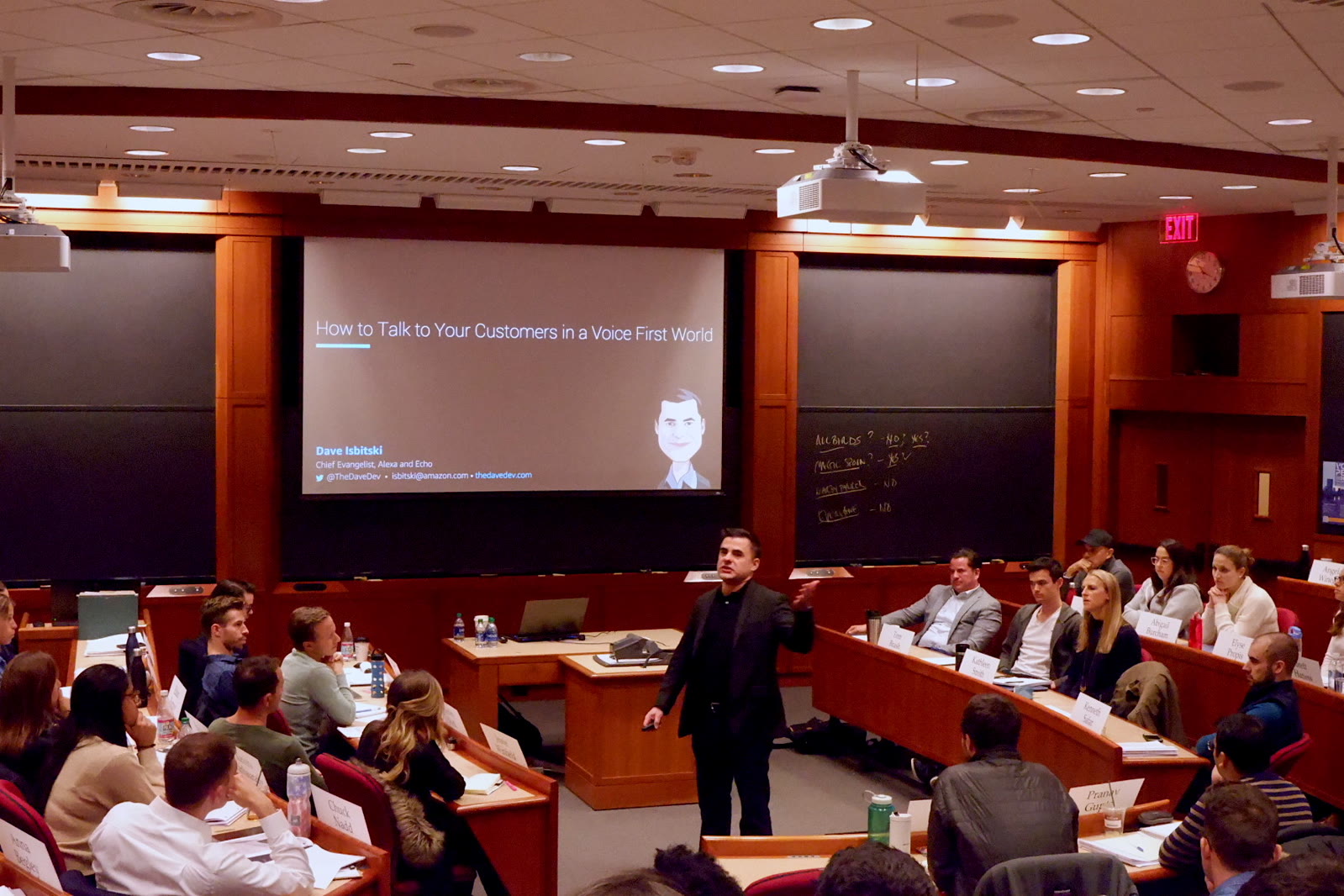
How to Talk to Your Customers in a Voice First World
A guest lecture for Harvard Business School's Moving Beyond DTC program about what changes when a brand can move beyond clicks and transactions—and speak directly with its customers.
Moving beyond the transaction
The direct-to-consumer model gave brands a more immediate relationship with customers through websites, apps, and social channels. My lecture looked one interface ahead: what happens when that relationship becomes a natural conversation?
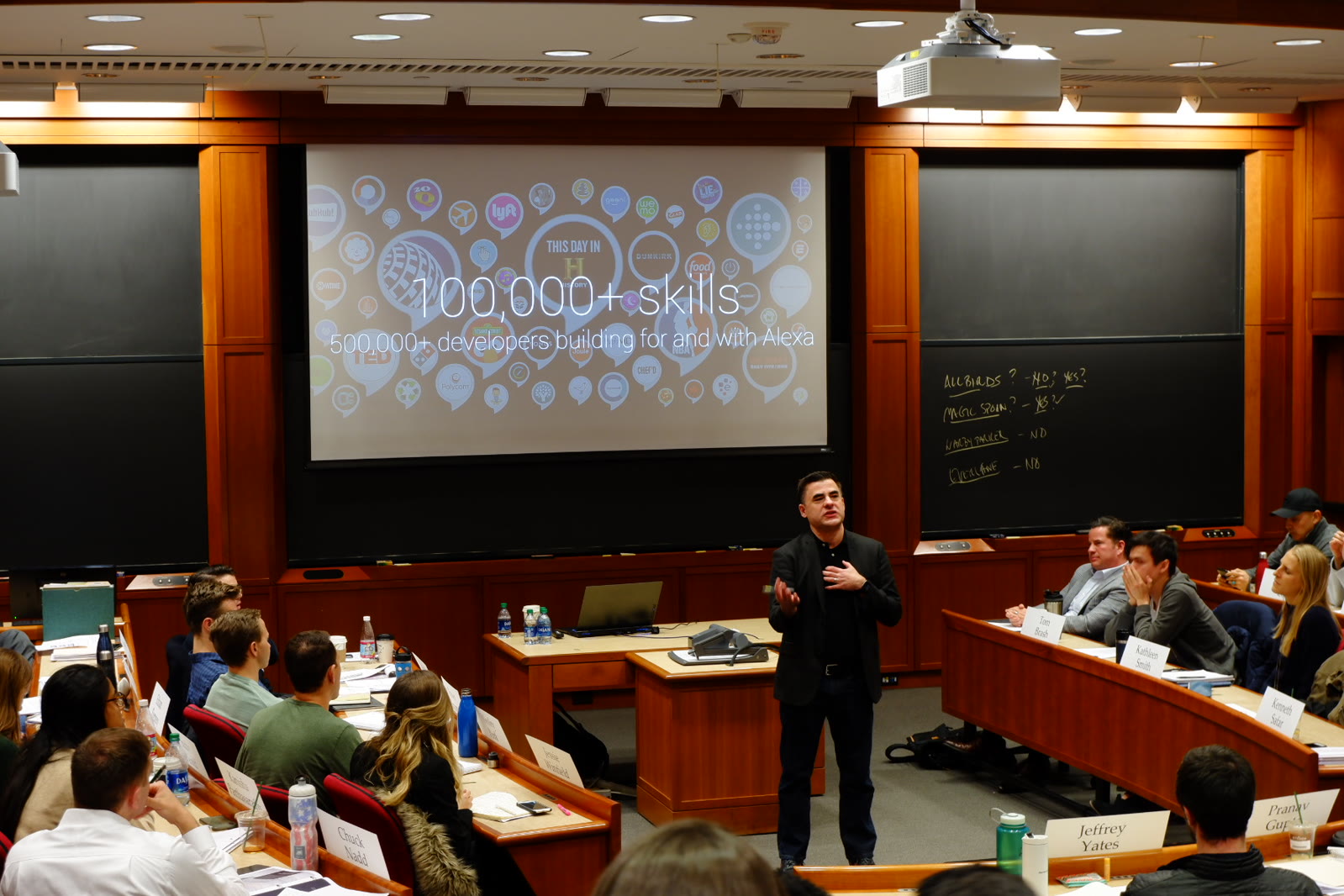
I used Alexa's growing developer ecosystem to make the shift concrete. Voice was not simply another channel for placing an order. It could let a brand answer questions, provide utility, establish a recognizable personality, and become useful in moments when a screen was not the right interface.
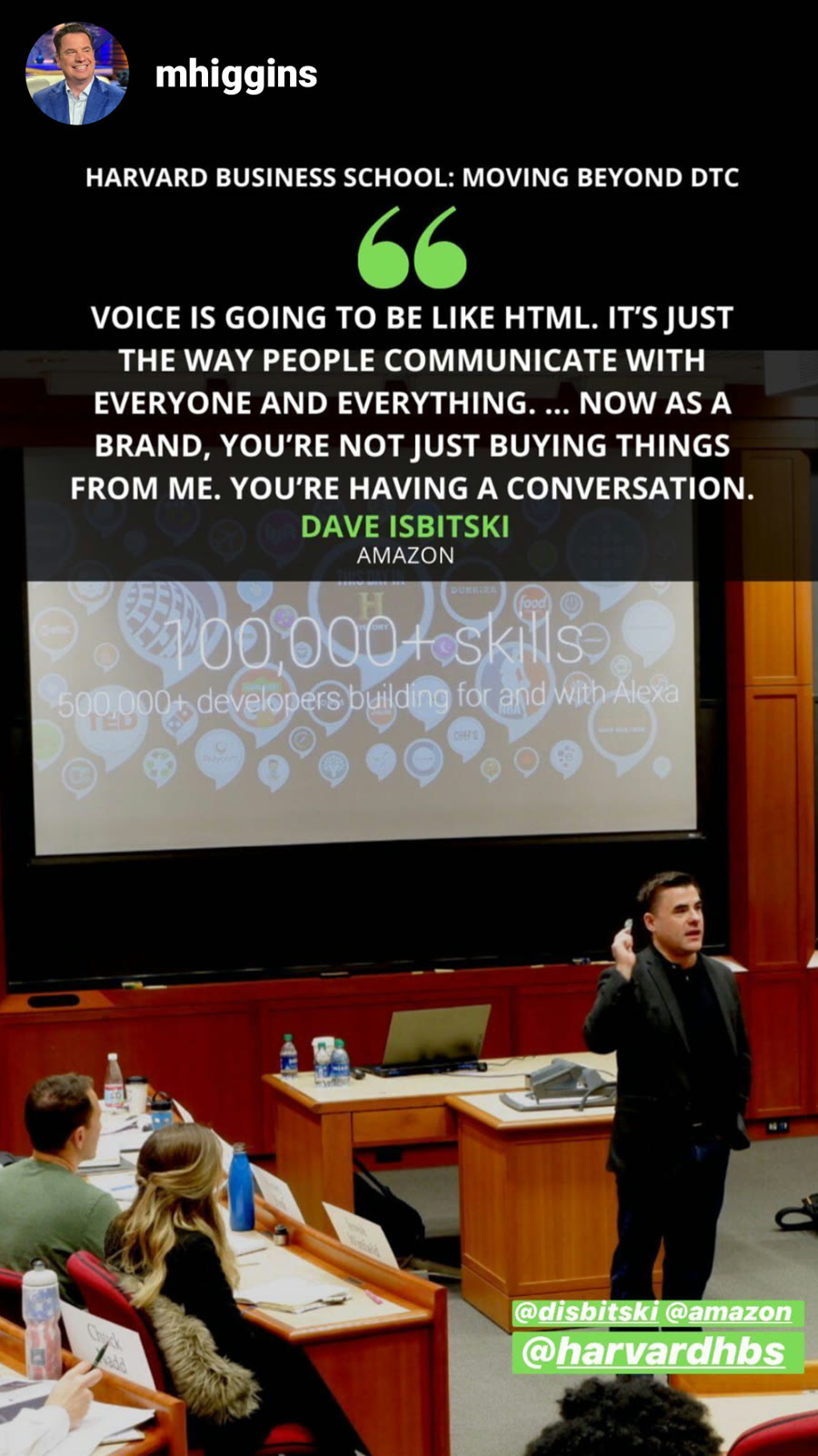
“Voice is going to be like HTML. It's just the way people communicate with everyone and everything. … Now as a brand, you're not just buying things from me. You're having a conversation.” Dave Isbitski · Harvard Business School, 2020
The lecture's through line
Like the web, voice could become a common way people reach services, information, and brands.
The strongest voice experiences solved a real customer need without forcing another screen into the moment.
A brand voice could answer, guide, and help—turning a one-way message into an ongoing exchange.
Inside the classroom
Program context