Digital assets
Smart contracts, blockchains, and the core infrastructure beneath new financial workflows.
Career artifact · Chainlink era
Teaching onchain finance, two hours at a time.
Starting in spring 2025, I led a recurring, in-person Chainlink series for finance and fintech professionals—making stablecoins, tokenization, real-world assets, and blockchain interoperability concrete enough to use.
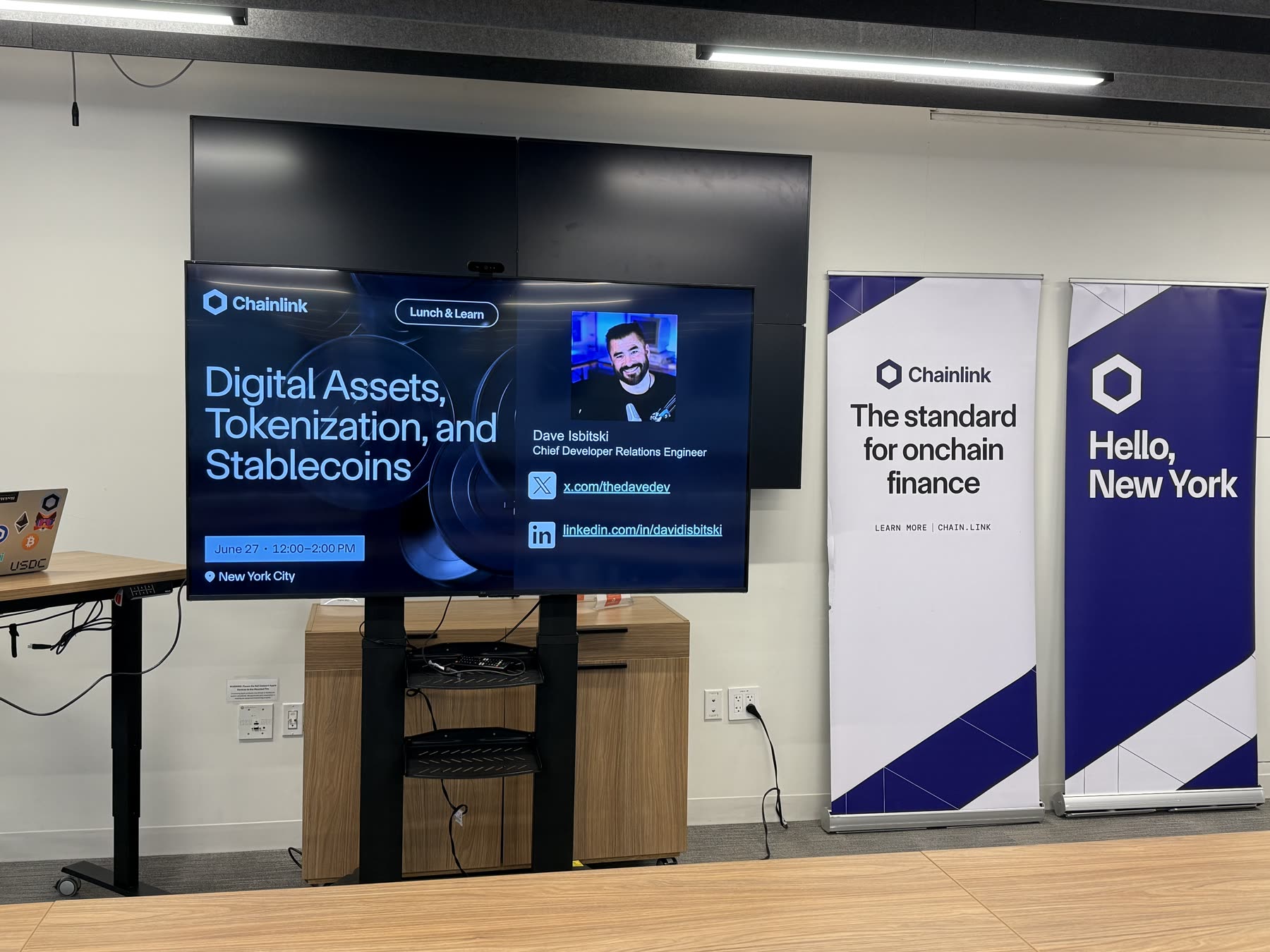
From concepts to working context
The sessions were deliberately small and practical. I could meet people where they were, build a shared foundation around digital assets and smart contracts, then connect the technology to the financial workflows and institutional use cases they already understood.
Each two-hour program moved from digital-asset foundations into stablecoins, tokenized real-world assets, and interoperability. Lunch made the format approachable; the room made it conversational; and the time after the formal agenda made space for deeper industry relationships.
The two-hour arc
Smart contracts, blockchains, and the core infrastructure beneath new financial workflows.
Why institutions are exploring programmable money for payments, settlement, and markets.
How real-world value can be represented, moved, and composed through tokenized assets.
How Chainlink and CCIP connect digital assets, data, and value across blockchains.
Inside the series
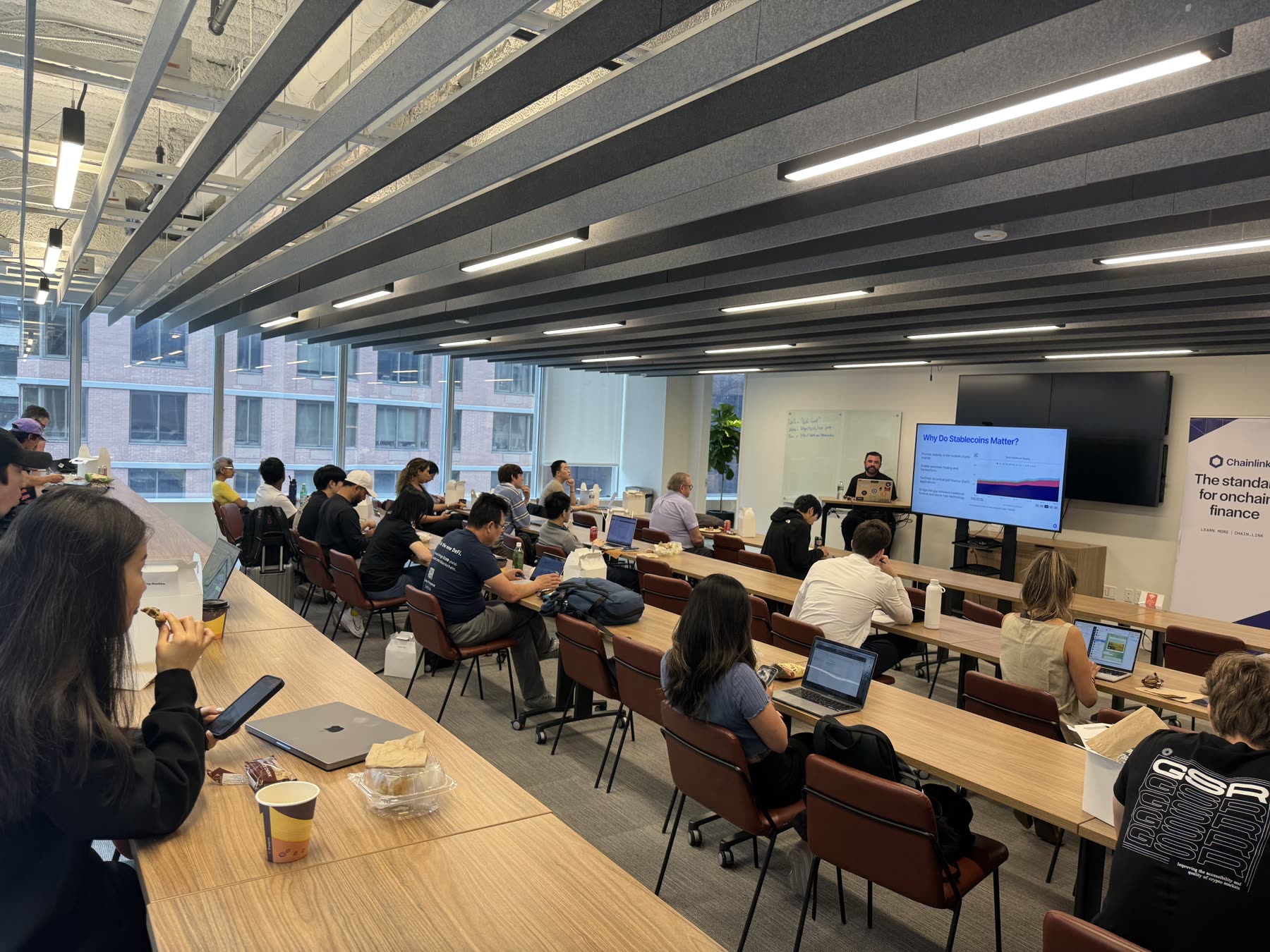
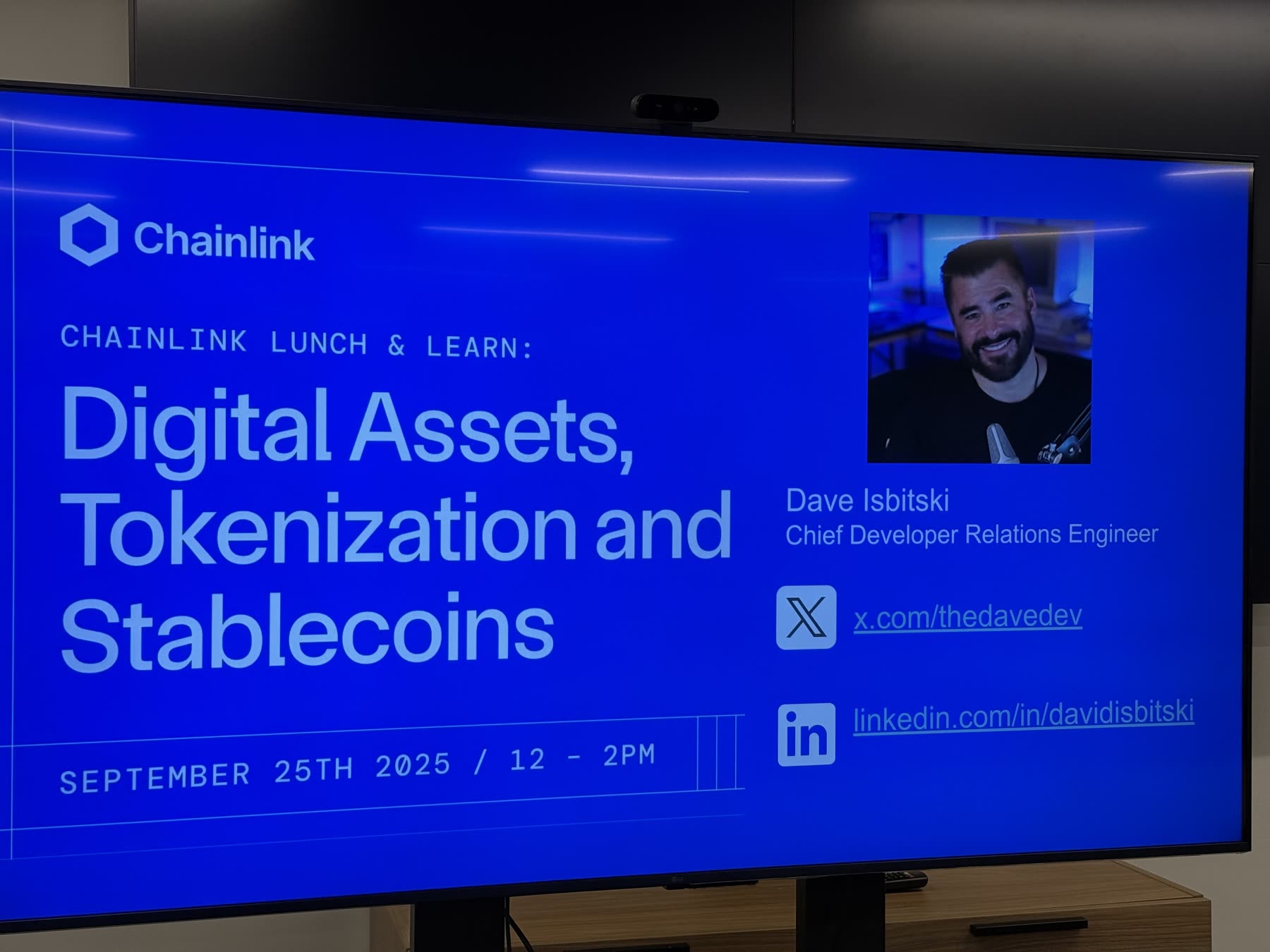
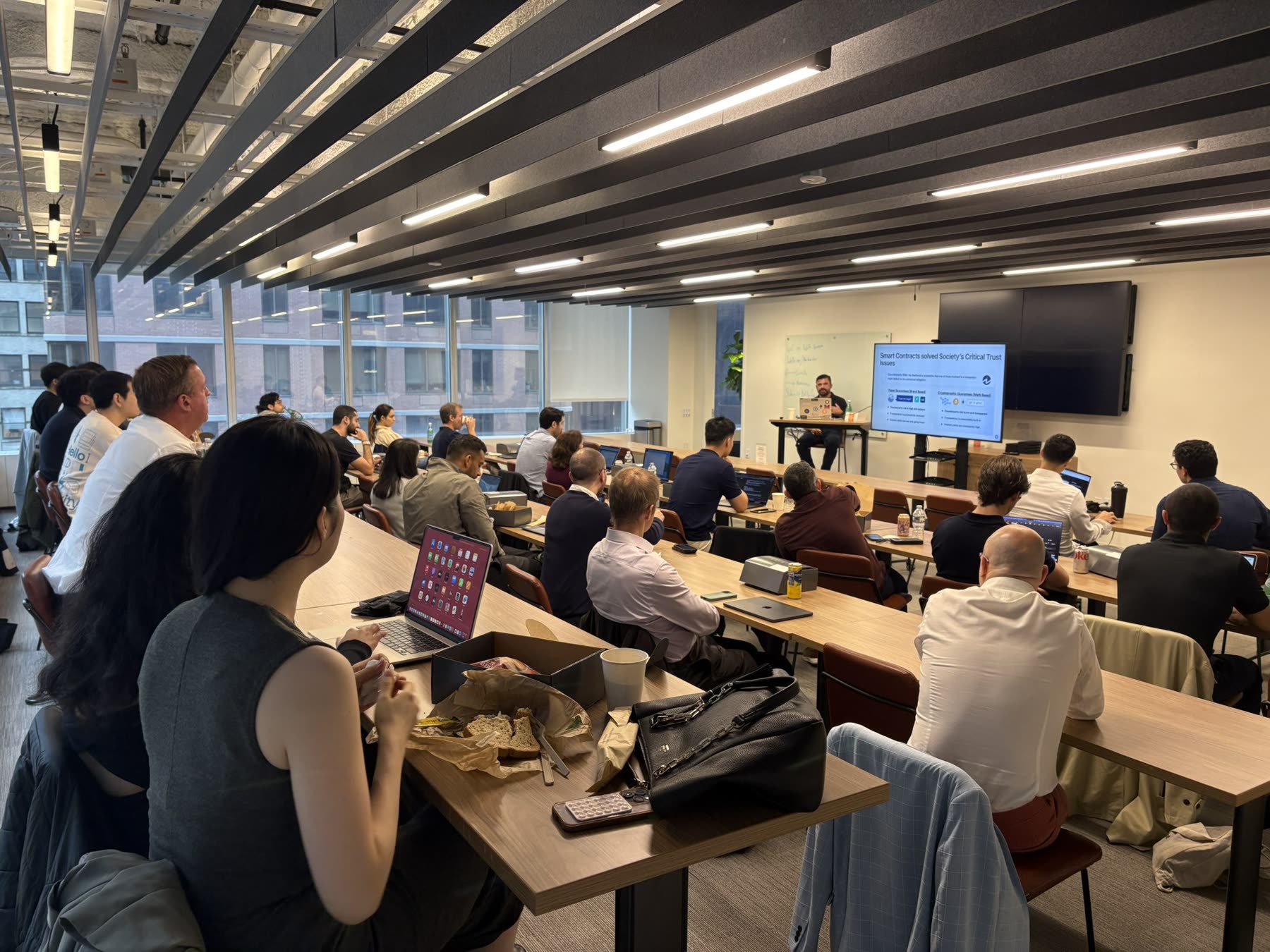
Why the room mattered
These sessions did more than transfer knowledge. They created repeated, in-person conversations with people working across financial services. One of those relationships helped open the door to my Swift opportunity, while others became lasting contacts across the industry.
Official records